Table of Contents
You’ve got a paddleboard session planned, a hike to a lake nobody else knows about, or a full day at the beach with people who actually expect cold drinks. You want your hands free. You want ice that lasts. And you’ve seen the YETI Hopper M20 pop up in every “best backpack cooler” list you’ve scrolled through.
But $325 for a soft cooler? You want to be sure.
That’s exactly what this review is here to answer. We’ve pulled together hands-on testing data and real-world feedback from paddlers, campers, beach families, sports parents, and boating enthusiasts who’ve put the Hopper M20 through its paces in desert heat, river rapids, and multi-day boat trips. No fluff — just the honest picture.
👉 Check the current price and availability of the YETI Hopper M20 on Amazon
Quick Summary: TL;DR
Who it’s for: Active outdoor people who need serious ice retention, hands-free carrying, and a cooler built to survive years of abuse.
Biggest Pros:
- Best-in-class ice retention among soft backpack coolers (up to 2+ days in real use)
- MagShield magnetic closure is genuinely fast and satisfying to use
- Bombproof build quality — DryHide shell resists UV, punctures, and mildew
- Truly leakproof — people have jumped into rivers wearing it without issues
- Comfortable padded straps that distribute weight well
Biggest Cons:
- The mouth doesn’t stay propped open, which makes loading ice messy
- Side-release buckles are stiff and non-adjustable — a pain point for kids and some adults
- No exterior pockets for your phone, keys, or wallet
- Expensive — even by premium cooler standards
- At 5.1–5.6 lbs empty, it’s heavier than most soft coolers
Quick Recommendation: If ice retention and durability are your top priorities and you’re willing to pay for it, this is the best soft backpack cooler on the market. If you’re more budget-conscious or need storage pockets, there are better options for the money.
Product Overview
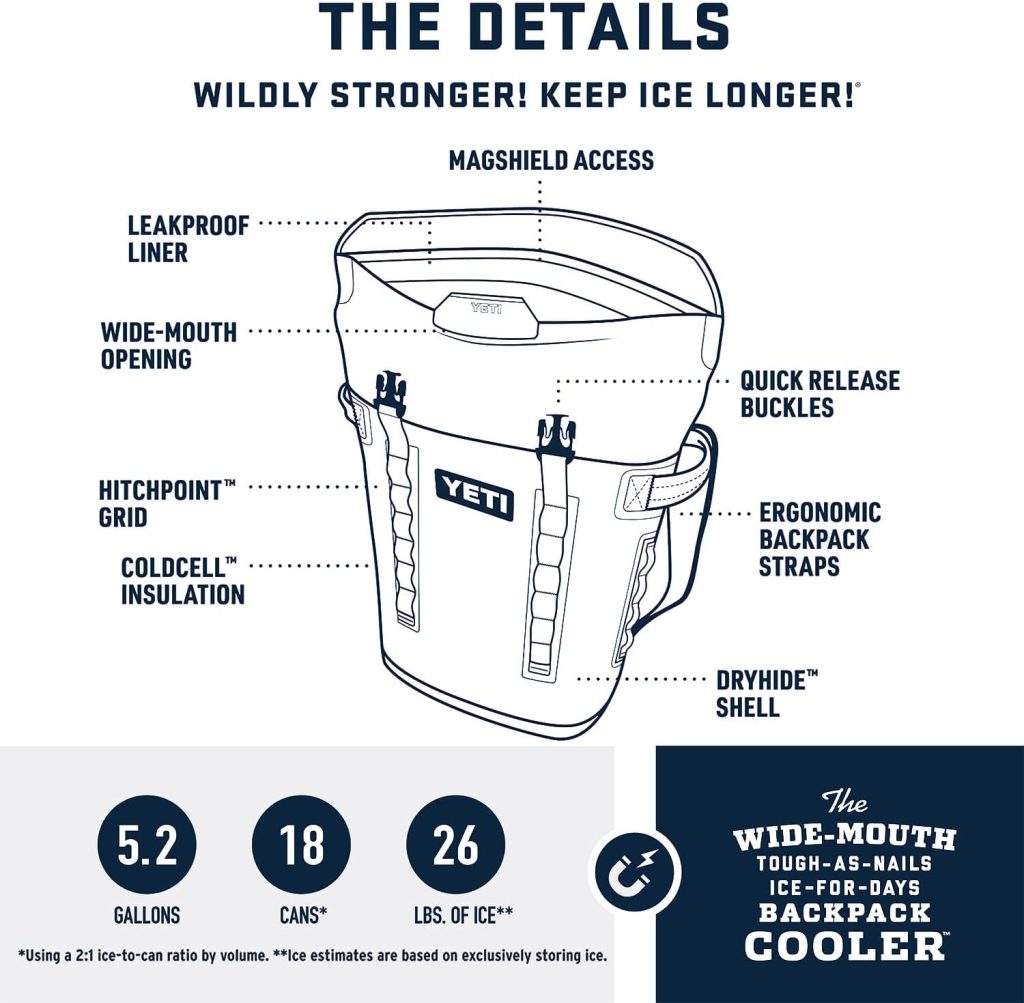
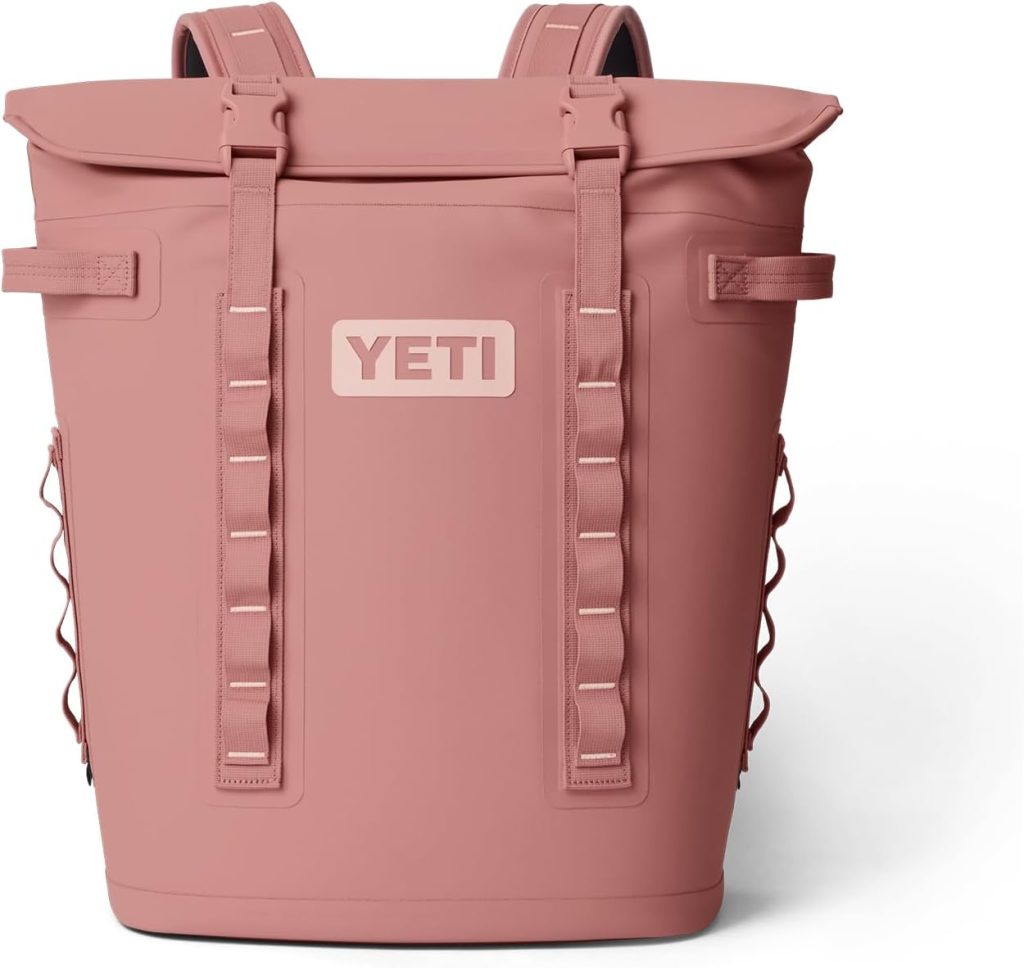
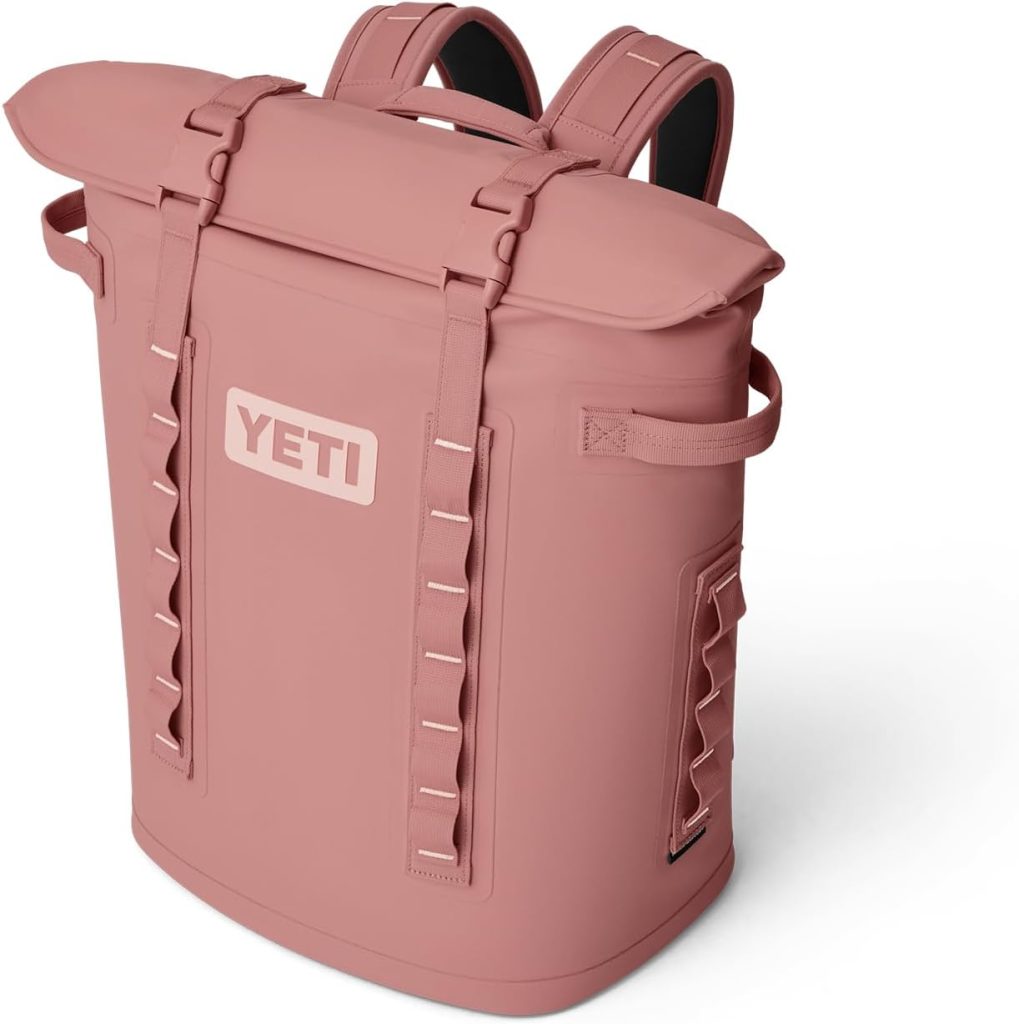
The YETI Hopper M20 is YETI’s flagship backpack-style soft cooler. It was redesigned with their second-generation MagShield magnetic closure system — an upgrade over the original M30 that fixes the “won’t stay open” problem the first generation was known for (more on that in a moment).
In Sandstone Pink, it’s a limited-edition colorway that regularly sells out — a soft, warm neutral that looks sharp whether you’re heading to a lake, a vineyard, or a kids’ soccer tournament.
Key Specs at a Glance:
| Spec | Detail |
|---|---|
| Capacity | 20.1L / 36 cans (no ice) / 18 cans (with 2:1 ice) |
| Ice Capacity | 22 lbs of ice |
| Exterior Dimensions | 15.3″ × 9.9″ × 18.1″ |
| Interior Dimensions | 11.6″ × 8.9″ × 14.0″ |
| Empty Weight | 5.1–5.6 lbs |
| Retail Price | $325 |
| Wine Bottle Compatible | Yes (fits 7 bottles) |
| TSA Carry-On Compatible | Yes (check with airline) |
| Dry Ice Compatible | No — do not use dry ice |
Key Features Breakdown
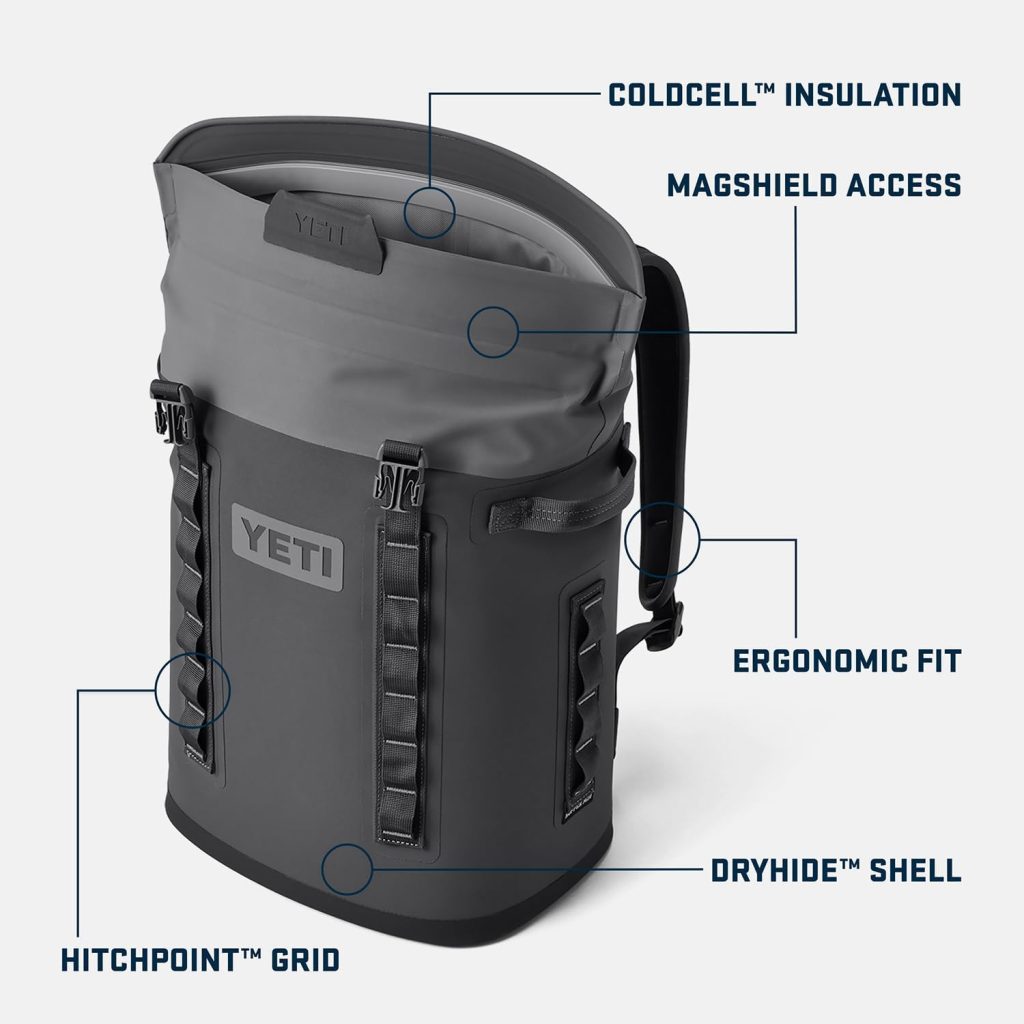
MagShield Access 2.0
The signature feature of the Hopper M20 is its magnetic closure system. Instead of a zipper or roll-top, a strip of ultra-strong magnets snaps the top shut with one hand — fast, clean, and satisfying. Once sealed, you fold the top over once and secure it with two side-release buckles for secure transport.
This is the second-generation version of the tech, which YETI redesigned after complaints that the original M30 closure wouldn’t stay open during loading. The newer design stays open while you’re packing and snaps shut with a gentle push. Real-world testers confirm it works much better than the first generation — though the opening is still narrower than, say, the YETI Hopper Flip series.
DryHide Shell
The exterior is made from high-density TPU-coated nylon that resists UV rays, punctures, and abrasion. Unlike a lot of soft coolers that start looking beat-up after a season, multiple reviewers note that the M20’s shell holds up after years of rough outdoor use. The exterior and interior are both treated for mildew resistance.
ColdCell Insulation
Closed-cell foam insulation is what gives YETI its ice retention edge. Cold air can’t escape through the foam cells the way it can with cheaper materials. Combined with the leakproof RF-welded interior liner, the Hopper M20 creates a near-airtight cold environment that most soft coolers can’t match.
HitchPoint Grid
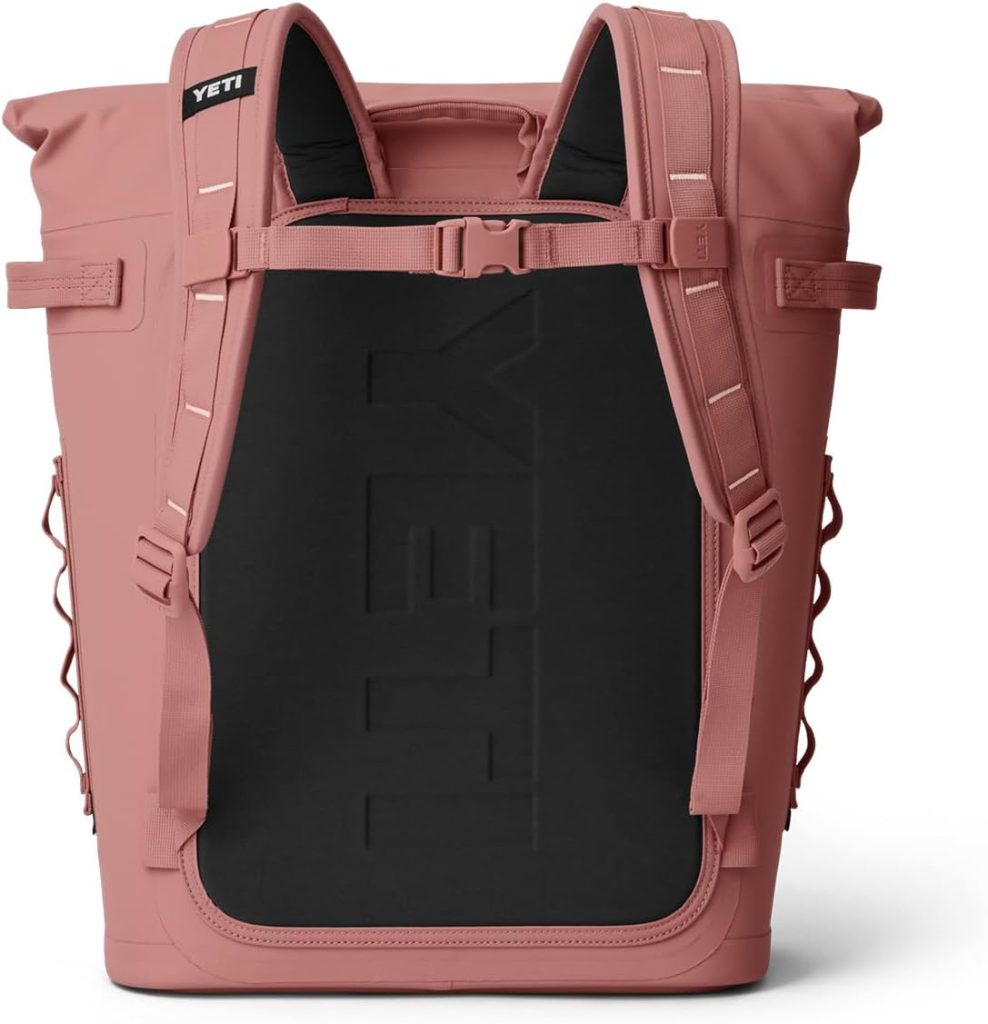
A web of attachment loops runs along the exterior of the cooler and down both shoulder straps — seven loops per strap. You can clip on YETI’s Sidekick Dry Gear Case for a dry storage pocket (solving the no-pockets problem), attach a Rambler Bottle Sling, or hook on a bottle opener. These accessories are sold separately, which is worth noting when factoring in the total cost.
Leakproof Liner with RF-Welded Seams
No stitching on the interior means no needle holes for water to sneak through. One reviewer jumped off a boat into a river and swam to shore with the cooler on her back — nothing got in. Another confirmed the cooler floated. The seal is so airtight that YETI’s own warnings include: don’t leave it open around animals (entrapment risk) and absolutely no dry ice (burst risk).
Real Pros: What People Actually Love
- Ice that actually lasts. Outdoor Gear Lab tested the M20 at below-40°F temps for 3.6 days and below-50°F for 4 full days — far above competing soft coolers. Real-world users consistently report 1–2 days of performance in hot weather, even with the cooler sitting in direct sun.
- The magnetic closure is genuinely impressive. “The magnets on each side make such a satisfying ‘bloop’ when sealed shut — sometimes I’d open and close it just for fun.” Multiple reviewers call it one of the best closure systems they’ve ever used on a cooler.
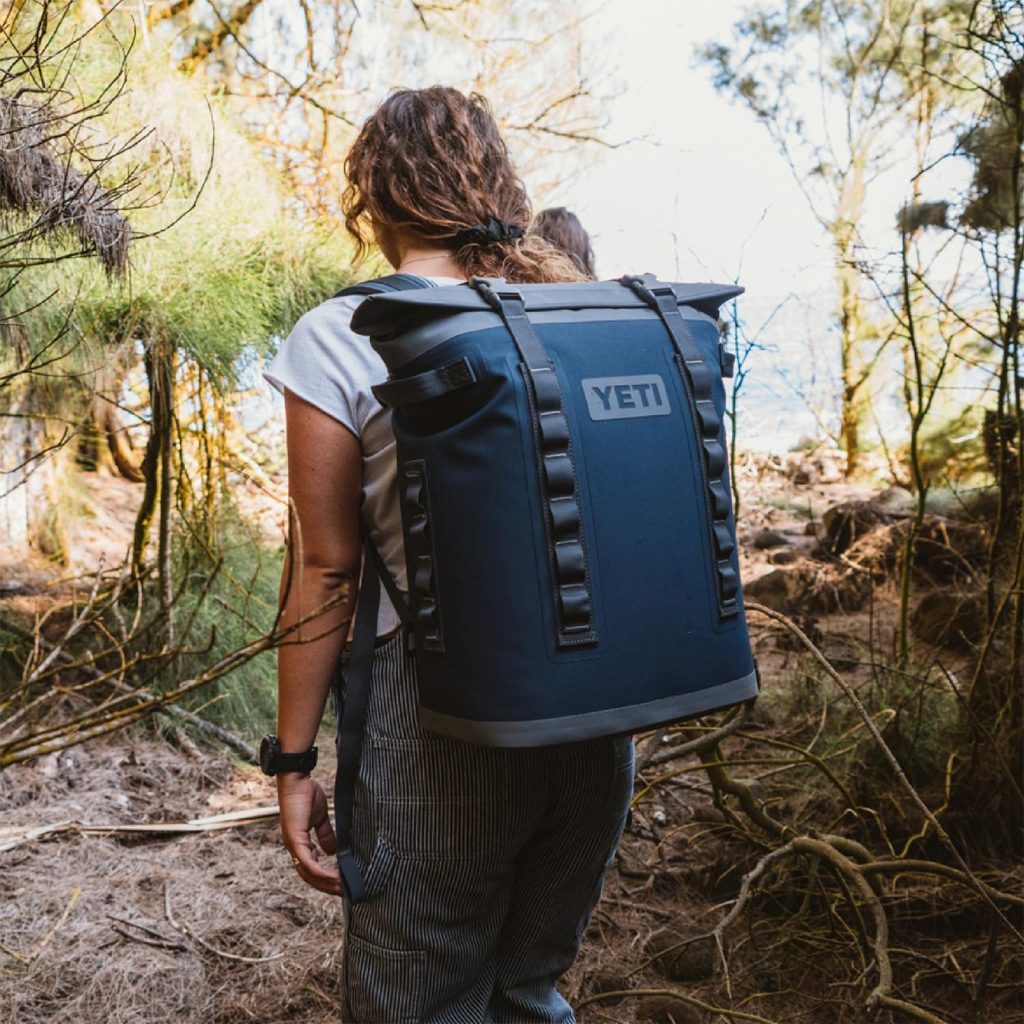
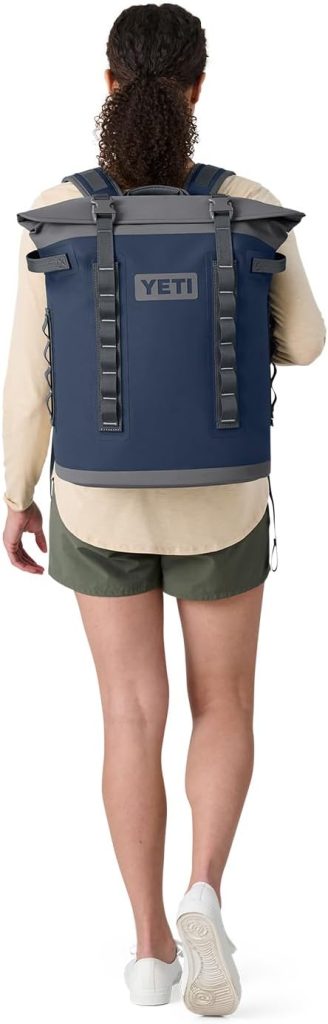
- It doesn’t bounce or shift on your back. Padded shoulder straps with a removable chest strap clip provide a stable carry, even when fully loaded. Multiple reviewers mention forgetting they were even wearing it.
- Built like it could outlast you. The DryHide shell holds up through whitewater rafting, beach days, boat trips, and rough terrain. One reviewer used it for over a year of heavy use with zero signs of wear.
- Truly, genuinely, leakproof. This comes up in virtually every review. The RF-welded interior has never leaked on testers even when tipped, bounced, or submerged.
- Great backpack cooler for sports parents. Multiple buyers mention using it for baseball, soccer, and lacrosse tournaments where you’re on your feet all day and need cold drinks for a group.
- TSA carry-on fits most overhead bins. Useful for island trips, boat excursions, and travel where you want chilled drinks without checking a bag.
👉 See current pricing and color availability on Amazon
Real Cons: What People Actually Complain About
- The mouth doesn’t stay propped wide open. This is the single most-cited complaint across reviews. Even with the second-gen MagShield fix, the opening still only stays open about five inches on its own — not wide enough to easily dump a full bag of ice without spillage. “I’ve cursed at it more than once when trying to dump ice in it.” If you want a truly wide-open soft cooler, the Hopper Flip series has an edge here.
- The buckles are a genuine pain. The two side-release buckles that secure the folded top are stiff and non-adjustable. You have to push down on the top to create slack, then clip them. Younger kids (and some adults) find this legitimately frustrating.
- Zero exterior pockets. There’s nowhere to stash your phone, keys, cash, or sunscreen without digging into the main compartment. YETI sells the Sidekick Dry accessory to solve this, but it’s an extra purchase.
- Heavy before you even add food. At 5.1–5.6 lbs empty, the M20 is noticeably heavier than most competing backpack coolers. Fully loaded, it’s a workout — fine for the straps, but you’ll feel it on a long hike.
- Expensive — and accessories push it higher. At $325, this is top-dollar for a soft cooler. No accessories are included — not a bottle opener, not a dry bag for your phone, not even a basic clip. For that price, you’d hope for a little more.
- Awkward to fully load. Because of its depth and the magnetic closure that wants to snap shut while you’re packing, reaching into the cooler (especially when it’s nearly full) means arms brushing against the interior walls and the magnetic strip.
- Bulky storage footprint. The rigid construction that makes this thing so durable also means it doesn’t collapse or compress when empty. It takes up the same amount of space whether it holds 36 cans or nothing.
Who This Is For (And NOT For)
This cooler is ideal if you:
- Spend serious time outdoors and need a cooler that can take a beating for years
- Regularly do beach days, lake trips, paddleboarding, kayaking, rafting, or hiking
- Need hands-free carrying and don’t want to drag a wheeled cooler across sand or trails
- Want the best ice retention a soft-sided cooler can offer
- Are a sports parent doing long tournament days in the heat
- Travel by boat or plane and want something TSA-friendly
- Love the YETI ecosystem and want accessories to work together
Skip this cooler if you:
- Are primarily looking for the best value-per-dollar (the RTIC Backpack 30 at around $100 is a solid alternative)
- Need a comfortable day hike pack with multiple pockets and a waist belt
- Want to use dry ice (that’s a hard no — it can literally burst this cooler)
- Have kids who’ll be opening and closing it repeatedly (those buckles will frustrate them)
- Only need a cooler occasionally — the premium here is for people who’ll use it hard and often
Deep Dive: What Real Users Are Saying
Across testing sites, independent outdoor gear reviews, and retail customer feedback, a few consistent themes emerge.
On durability: Reviewers from paddling and water sports backgrounds — people who drag gear across rocky river banks and strap coolers to rafts — consistently call the Hopper M20 the most rugged soft cooler they’ve owned. The DryHide shell doesn’t develop the scuffs, fading, and peeling that cheaper neoprene or polyester coolers show after a season.
On ice retention: The standout finding across structured tests is that the M20’s insulation genuinely outperforms the rest of the soft cooler category by a significant margin. One reviewer pre-cooled the cooler for just 90 minutes and it still had frozen ice after 7 hours outdoors in summer heat, including 5 hours of direct sun. Another left ice in it overnight — forgot to empty it — and it was still frozen in the morning.
On the MagShield: Love is near-universal for the concept and the feel of the closure. The complaints are specific to the narrow opening and the stubborn buckles, not the magnets themselves. Several reviewers describe the snap of the magnets closing as genuinely satisfying — one called it addictive.
On comfort: Most reviewers find the straps comfortable for a loaded cooler, especially compared to hard coolers or bag-style options. The main complaint is that the backpack doesn’t conform as naturally to the body as a regular hiking pack. For short trips to the beach or boat, this is a non-issue. For a multi-hour hike with a full load, you’ll notice the stiffness.
On the price: The consensus is that you’re buying into longevity and performance, not just the brand name. Most reviewers say the cooler feels worth the money after you’ve used it a few times. A smaller group feels that for $325, YETI should include at least one accessory — even just a bottle opener on one of the HitchPoint loops.
Customer Sentiment Breakdown
Overall satisfaction: High — most hands-on reviews rate this 4 to 4.5 out of 5 stars. Outdoor Gear Lab named it the top soft cooler in their lab-tested ranking, and SPY rated it the best backpack cooler out of nine competing models.
Most common praise: Ice retention, build quality, MagShield closure feel, portability, and leakproof performance.
Most common complaints: Narrow/stiff opening, difficult buckles, no exterior pockets, and the price-to-accessories ratio.
Deal-breaker complaints: Very few. The buckle issue is the only complaint that shows up frequently enough to feel like a design flaw rather than a user preference. For people with kids or limited hand strength, it’s worth factoring in.
Review authenticity: Reviews across multiple independent testing sites (OutdoorGearLab, OutdoorCrunch, SPY, The Inertia, PaddlingLife) are consistent and experience-based. Positive reviews are credible — they consistently acknowledge the same weaknesses that negative reviews cite, which signals authentic testing rather than incentivized results.
Value for Money Analysis
At $325, the YETI Hopper M20 is unambiguously a premium product. The question isn’t whether it’s expensive — it is — but whether you get premium performance for that price.
The answer, based on real-world evidence, is yes — but with conditions.
The ice retention advantage is real and measurable. In structured lab testing, the M20 kept temperatures below 40°F for nearly 3.6 days, an outcome that no other soft-sided backpack cooler in the same tests came close to matching. If you’re doing anything where cold food safety matters over a full day or a weekend, that’s not just a nice-to-have — it’s the whole point of bringing a cooler.
The durability advantage is also real. A cooler that costs $325 and lasts 7–10+ years has a lower cost per use than a $100 cooler you replace every two or three seasons.
Where the value argument weakens: if you need a side pocket, you’ll spend another $40–60 on a Sidekick Dry. If you don’t already have YETI ice packs or accessories, the ecosystem costs add up. And if you’re a casual user who only pulls out a cooler a few times a summer, the performance gap over a quality mid-range cooler probably won’t matter to you.
Comparison to Alternatives
RTIC Backpack 30 (~$100): A strong value alternative with solid ice retention and a more comfortable carry. Comes with exterior pockets. Gives up some durability and insulation performance compared to the YETI, but delivers about 80% of the performance at 30% of the cost. Good choice for casual or budget-conscious buyers.
IceMule Pro (~$140): Softer and more pliable on the back, better for comfort on long hikes. Trade-off is less ice retention and a less rugged build.
YETI Hopper Flip 18/12: If you want a tote-style cooler with a wide-open mouth that stays open for easy loading, the Hopper Flip is worth considering. You sacrifice the backpack carry convenience but gain significantly easier packing. Great for picnics and tailgates, less ideal for active adventures.
YETI Hopper M12: YETI’s smaller sibling to the M20. Shares all the same tech but adds a Kangaroo Pocket for phone/keys/wallet — the pocket that M20 owners most often say they want. Smaller capacity, better organization. Worth considering if you’re solo and don’t need to carry drinks for a group.
FAQ Section
How long does ice last in the YETI Hopper M20? In real-world use with proper packing (pre-cooled overnight, 2:1 ice ratio), most users report 1–2 full days of ice retention in warm-to-hot weather. Lab testing shows ice remaining below 40°F for up to 3.6 days under controlled conditions. Results vary based on how often you open it, ambient temperature, and how full the cooler is.
Can you use dry ice in the YETI Hopper M20? No — this is explicitly prohibited by YETI and is a safety issue. Because the MagShield closure creates an airtight seal, dry ice creates pressure buildup that can cause the cooler to burst. Use standard ice or YETI-branded ice packs instead.
Does the YETI Hopper M20 have any pockets? No exterior pockets are included. The HitchPoint Grid on the exterior provides attachment loops, but you’ll need to purchase the Sidekick Dry Gear Case separately to get a dedicated dry-storage pocket for phones, keys, and small items.
What’s the difference between the YETI Hopper M20 and the M12? The M12 is smaller (fits around 20 cans vs. 36) and adds a built-in Kangaroo Pocket for phone and keys. The M20 has greater capacity and is better suited for groups or full-day outings. If you’re usually solo and want organization, the M12 might be the smarter buy.
Is the YETI Hopper M20 worth it compared to cheaper backpack coolers? If ice retention and long-term durability are priorities — yes. If you want the best value-per-dollar and can accept shorter ice life and a less rugged build, something like the RTIC Backpack 30 delivers solid performance at a third of the price.
Can kids open and close the YETI Hopper M20? The magnetic closure is easy enough for kids to manage with one hand. However, the side-release buckles that secure the folded top are stiff and non-adjustable, and multiple reviewers note that younger kids struggle to close them. Worth keeping in mind if you’re buying this for a family situation.
Does the YETI Hopper M20 Sandstone Pink color come in and out of stock? Yes. Limited-edition colorways like Sandstone Pink are seasonal and regularly sell out. If you see it available in your size, don’t wait too long — these colors don’t always come back.
Final Verdict: Is the YETI Hopper M20 Worth It?
After reviewing hands-on tests from paddling trips, lake days, road trips, boat excursions, and controlled lab evaluations — the YETI Hopper M20 Backpack Soft Cooler earns its reputation as the best soft backpack cooler you can buy right now.
The ice retention is real. The build quality is real. The MagShield closure is genuinely innovative. And the Sandstone Pink colorway is, frankly, one of the more attractive limited-edition options YETI has released — the kind of cooler that gets compliments at the pool deck.
The cons are real too. The opening doesn’t stay wide, the buckles are a workout, and $325 without a single accessory included stings a little. But none of those complaints are deal-breakers — they’re inconveniences, not defects.
If you’re the kind of person who’s outside regularly, takes your gear seriously, and has been burned by cheaper coolers that lose ice by noon — this is the cooler you’ve been waiting to justify buying. Once you have it, you’ll wonder what took you so long.
👉 Grab the YETI Hopper M20 on Amazon — check current price and color availability
Disclosure: This post contains affiliate links. If you purchase through our links, we may earn a small commission at no extra cost to you. We only recommend products we genuinely believe in.